

Hyperbaric Oxygen Therapy
We operate out of the Hyperbaric Medicine Centre at Netcare St Augustine’s Hospital. The centre is home to a multiple-chamber chamber, able to accommodate up to 6 patients at a time. This chamber is currently the only certified and medical aid-accredited hyperbaric oxygen chamber in KwaZulu-Natal.
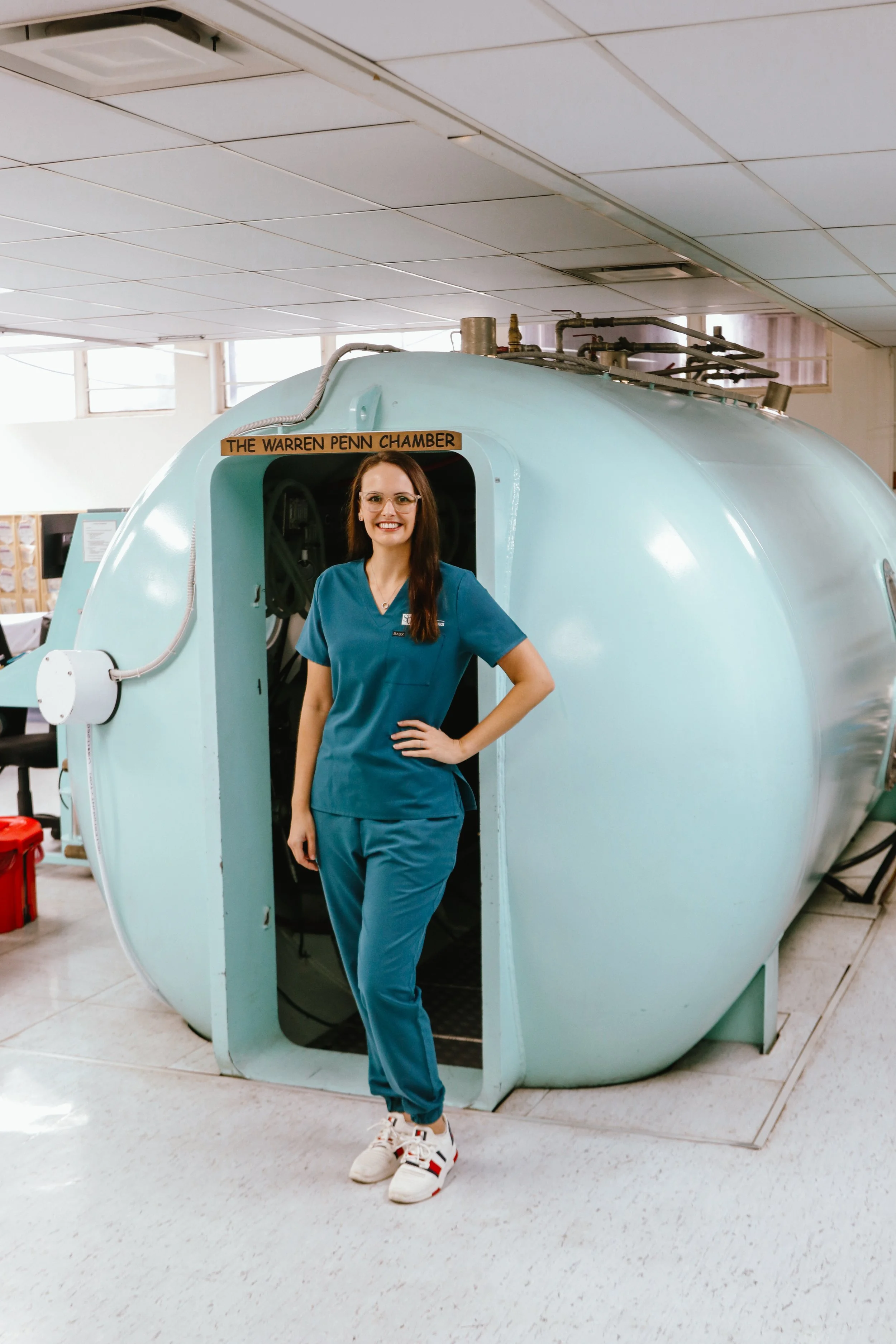
Hyperbaric Oxygen Therapy(HBOT) is a medical treatment involving breathing pure oxygen in a pressurised chamber. Our chamber is pressurised to 2.4 atmospheres absolute (ATA), equivalent to the pressure at a depth of 14 meters underwater. This is the pressure level supported by scientific research for optimal benefits.
At this elevated pressure, oxygen is more readily absorbed into your blood plasma and bodily tissues, significantly increasing oxygen levels throughout your body. This enhanced oxygenation triggers a cascade of healing responses, including reduced inflammation, accelerated tissue repair, and heightened infection resistance.
How does it work?
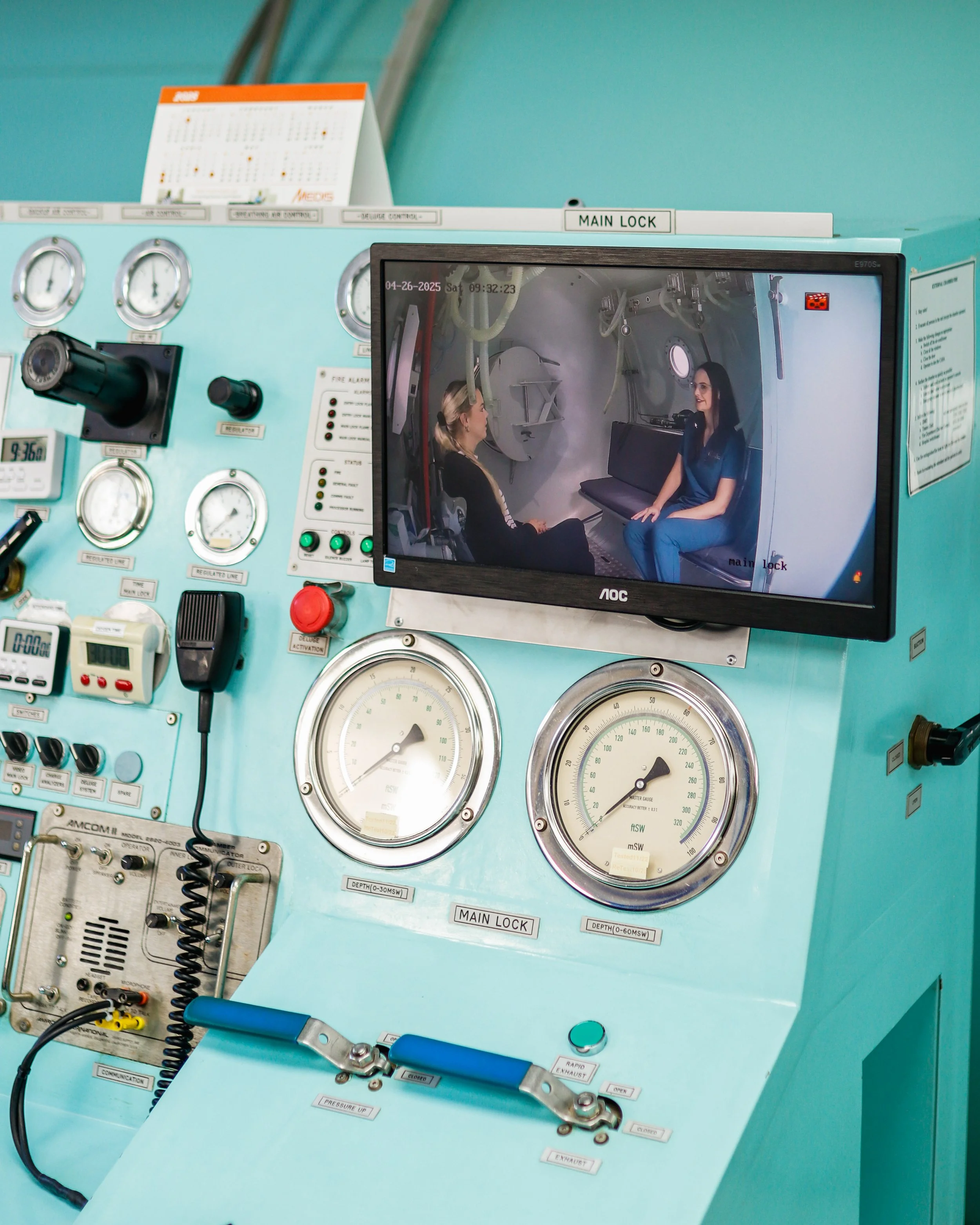
Hyperbaric oxygen therapy offers a range of benefits due to its ability to enhance oxygen delivery to tissues. Some of the key advantages include:
Accelerated wound healing: HBOT promotes faster healing of chronic wounds, diabetic ulcers, and post-surgical incisions.
Reduced inflammation: HBOT helps reduce swelling, lowers inflammatory cytokines, controls stress responses, and supports faster repair with less tissue damage.
Improved circulation: Increased oxygen levels improve blood flow, benefiting conditions such as chronic refractory osteomyelitis and diabetic ulcers.
Enhanced immune function: HBOT improves the oxygenation of the blood, which assists with killing certain bacteria and augments the effects of certain antibiotics.
Neurological benefits: HBOT has been proven to reduce the neurological effects of decompression sickness.
The Benefits
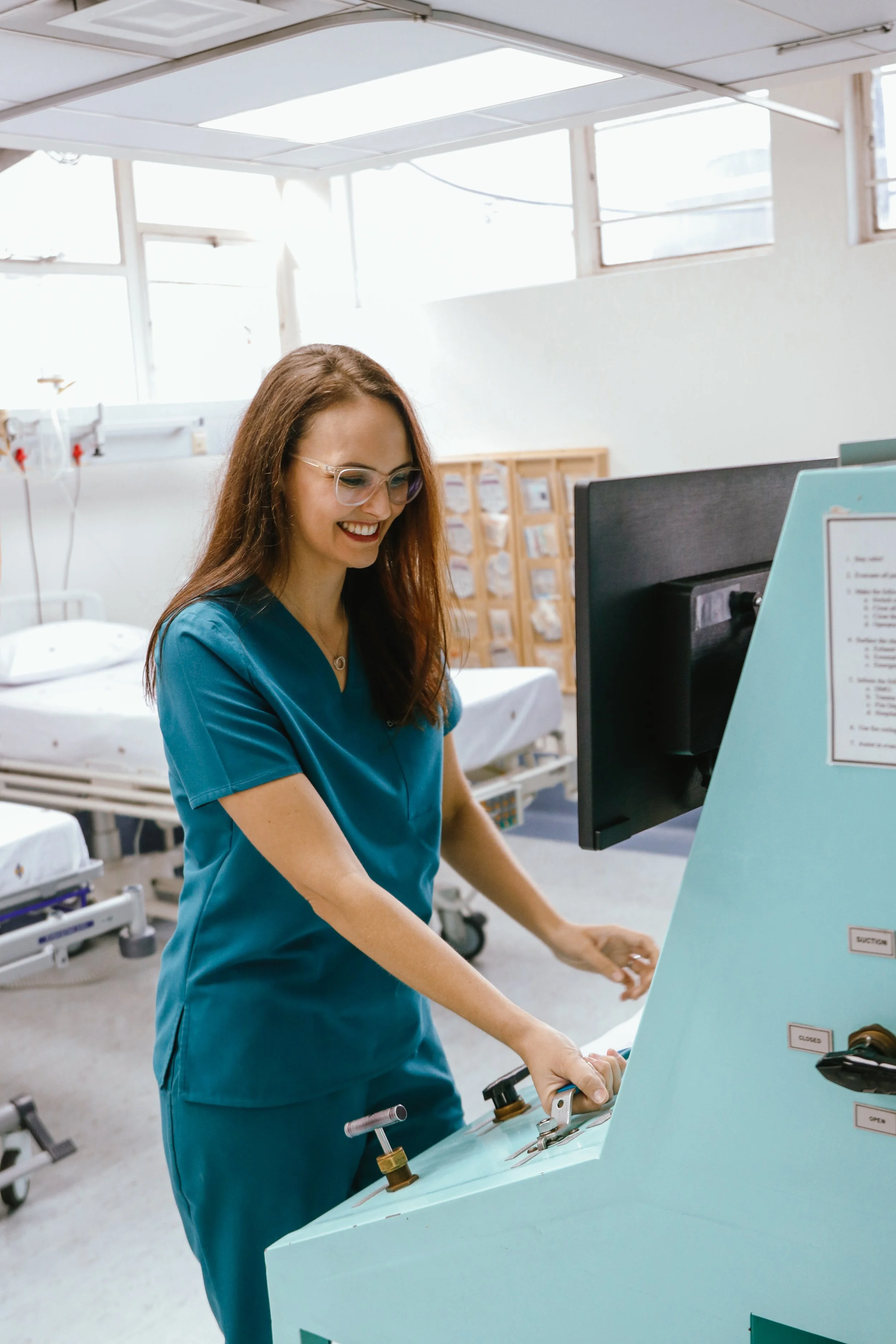
There are currently 14 approved conditions that are medical aid-affiliated.
These include:
What does HBOT treat?
-
Diabetic Ulcers and Problematic Wounds
Diabetic ulcers and problematic wounds, which encompass a range of conditions, including arterial and refractory venous stasis ulcers, and non-union or wound dehiscence, are wounds that often involve damaged blood vessels and nerve endings. Diabetic patients obtain wounds on their feet as a complication during desensitisation. Due to the damaged blood flow, wound healing does not happen effectively enough, and ulcers may develop. HBOT augments O2 flow, stimulates new blood vessel formation and activates white cells and fibroblasts. Treatment effectively delivers enough oxygen to the area to allow for effective wound healing, and in serious cases is an effective means to stave off an amputation. Wounds require white cells, fibroblasts and growth factors for healing. HBOT augments the activation of these cells as well as improves their circulation through angiogenesis.
Central Retinal Artery Occlusion
Central Retinal Artery Occlusion is a sudden blockage of the central artery supplying blood to the retina in the eye. It leads to a sudden, painless, blindness in one eye and is considered an ophthalmic emergency. HBOT hyper oxygenates blood plasma, facilitating oxygenation of the retina through collateral arteries. It also reduces the inflammation, helping preserve retinal tissue.
-
Chronic refractory osteomyelitis is a bone infection resistant to treatment. These infections contain sequestra- devascularised and dead bone fragments, making them difficult to treat with antibiotics. HBOT stimulates angiogenesis and augments the antibiotics, allowing for the infection to be treated.
-
After radiation therapy, especially to cancers of the head, neck, bladder, and pelvis, healthy tissue surrounding these cancers may be damaged. Radiation injuries may be to soft tissue, or present as bony necrosis, though the underlying cause is the same. These injuries are due to progressive blood vessel and connective tissue loss experienced with radiotherapy. HBOT improves the oxygenation to these areas, stimulating angiogenesis and allowing tissue repair, reducing the tissue damage.
-
A common reconstructive surgical procedure will include a flap or graft reconstruction, especially after a cancer resection. This is when skin and/or muscle is relocated to another site on the body. This is usually performed by a plastic surgeon. If the graft should have poor blood supply in the new location, it may become threatened with the potential of necrosing. HBOT reduces the oedema (engorgement of the flap) and allows for it to oxygenate and survive. Such cases are treated twice a day for the first few days until the skin graft has developed its own adequate blood supply.
-
During SCUBA or technical diving, pressurised air is provided as breathing supply. Largely this is a mixture of nitrogen (78%) and oxygen (20.9%). As it is inhaled at pressure, the gasses dissolve into the body. If a person ascends too quickly, nitrogen will dissolve out of solution and bubbles may form in the blood. Stroke-like symptoms result and can be permanent if not treated with recompression. In HBOT, treatment involves recompressing the diver which allows the nitrogen bubbles to reduce in size, and more slowly dissolve out of solution; in a controlled manner and in an environment absent of Nitrogen.
-
A gas embolism is a medical condition that involves a gas bubble that forms in the arterial system due to severe decompression sickness, or as a result of surgery. The bubbles affect the organs including the heart, brain and spinal cord resulting in stoke-like symptoms. HBOT reduces the size of the bubble and the inflammatory effects, reducing its effect on the organs and allowing for the bubbles to slowly dissolve out of circulation. This indication is generally grouped with decompression sickness.
-
During a traumatic event such as a car accident, bodily tissues get damaged, resulting in swelling and inflammation. However, during these injuries, the pressure within a tissue compartment may exceed the maximum physiologically tolerable pressure, resulting in further tissue death as it is oxygen starved. HBOT reduces the inflammation and oedema, improving oxygenation and reducing tissue death.
-
A collection of infections that occurs inside the brain. HBOT stimulates angiogenesis (new blood vessel formation) and reduces oedema, diminishing the amount of damaged brain tissue. It also augments antibiotics allowing for the infection to be treated effectively.
-
Necrotising soft tissue infections, or fasciitis, is life-threatening infection that damages skin, muscle, and connective tissue. The causative organisms are often anaerobic, which thrive in hypoxic environments, and commonly cause shock and sepsis. HBOT dissolves high levels of oxygen into the plasma, which inhibits anaerobic bacterial growth as oxygen is toxic to anaerobic bacteria. It also improves the efficacy of antibiotics and boosts white cell activation.
-
Acute thermal burns from fires, steam, or hot objects result in damage to the skin and underlying tissues. Burns cause oedema, tissue death, and increase the risk of opportunistic infections. HBOT reduces oedema through vasoconstriction, resulting in less tissue damage, and delivers oxygen to sites with compromised circulation, allowing for metabolic repair processes to occur.
-
This indication is a rapid, unexplained loss of hearing in one ear that usually occurs over 72 hours. It involves damage to the auditory nerve and is thought to be triggered by inflammation, where the cause is often unknown. HBOT reduces inflammation and improves the oxygen flow to the damaged nerve. The treatment is more efficacious if initiated within 14 days of the onset.
-
Upon inhaling carbon monoxide (CO) from a confined fire or exhaust fumes, the gas binds to haemoglobin in the red blood cells with a significantly higher affinity than oxygen does. Where CO poisoning has occurred, oxygen cannot be circulated around the body and hypoxia occurs, symptomatically similar to drowning although over a longer time. HBOT dissolves the oxygen into the blood plasma, rather than the red blood cells, and so can provide oxygenation of bodily tissues for a day or so whilst those damaged red blood cells naturally unbind CO or are replaced.
-
The bacteria Clostridium perfringens causes infections which result in gas gangrene. This is a life-threatening infection which results in toxin and gas production, causing tissue damage and necrosis. HBOT inhibits bacterial growth by increasing oxygen levels to a concentration that is toxic to anaerobic bacteria and reduces the inflammation, resulting in tissue healing.
-
Haemoglobin binds to oxygen, which is distributed via blood around the body. If the body has a critically low level of haemoglobin due to a traumatic injury or bone marrow failure, routine circulation of oxygen cannot occur effectively. HBOT allows for the O2 to be dissolved directly into the plasma fraction of blood resulting in oxygenation without haemoglobin. This is only a temporary solution whilst blood products are made available.
FAQs
-
Medical Hyperbaric Oxygen Therapy(HBOT) is a prescribed medical treatment performed in a hyperbaric chamber under medical supervision. Patients breathe 100% oxygen while the chamber is pressurised to a therapeutic pressure appropriate for the condition being treated. These are evidence based treatments.
This differs from low-pressure or ‘mild’ hyperbaric chambers sometimes marketed for general wellness purposes. These chambers are not medically accredited and do not go to the pressure required to illicit therapeutic response.
At Hyperbaric Med we provide HBOT for recognised clinical indications using evidence based treatment protocols approved by the Southern African Undersea and Hyperbaric Medical Association (SAUHMA)
-
During HBOT, breathing 100% oxygen at an increased atmospheric pressure allows significantly more oxygen to dissolve into the blood plasma. This helps deliver increased levels of oxygen to areas where circulation or oxygen supply may be compromised.
Depending on the condition being treated, this increased oxygen availability can support processes involved in healing, including new blood vessel formation, tissue repair, reducing swelling and supporting the body’s response to certain infections.
HBOT is generally used as part of a broader treatment plan rather than as a replacement for other necessary medical or surgical care.
-
An approved or recognised indication is a medical condition for which Hyperbaric Oxygen Therapy is accepted as an appropriate treatment based on available clinical evidence and established SAUHMA guidelines.
HBOT is sometimes promoted online for conditions that do not have the same level of supporting evidence. At Hyperbaric Med, we take an evidence-based approach and assess each patient individually before recommending treatment.
-
Hyperbaric Oxygen Therapy is used for specific recognised medical indications rather than as a treatment for every condition.
These include certain diabetic foot ulcers and non-healing wounds, delayed radiation tissue injuries, chronic refractory osteomyelitis, compromised skin grafts and flaps, necrotising soft tissue infections, carbon monoxide poisoning, decompression illness and other approved indications.
Whether HBOT is appropriate for you depends on your diagnosis, medical history and individual clinical circumstances. Our doctors will assess this before recommending treatment.
-
Yes, Hyperbaric Oxygen Therapy is a recognised treatment for certain delayed radiation tissue injuries that can develop months or even years after radiotherpay.
Radiation can damage small blood vessels within previously treated tissue, reducing it blood and oxygen supply and affecting its ability to heal. HBOT increases oxygen delivery to these tissues and can encourage the development of new blood vessels, supporting tissue repair and healing.
Treatment is recommended based on the type and extent of radiation injury and your individual medical circumstances.
-
HBOT may be recommended as an additional treatment for certain difficult-to-heal wounds, including selected diabetic foot ulcers.
By increasing oxygen delivery to tissues with compromised circulation, HBOT can support the body’s wound-healing process. However, it is only one part of the comprehensive wound management and does not replace appropriate wound care, infection management, pressure offloading, blood glucose control or other treatments recommended by your healthcare team.
Not every chronic wound requires HBOT, so patients are assessed individually to determine whether treatment is appropriate.
-
Hyperbaric Oxygen Therapy is generally considered safe when it is appropriately prescribed and administered under medical supervision.
As with any medical treatment, HBOT does have potential risks and side effects. The most common are related to changes in pressure, particularly in the ears and sinuses; temporary vision changes can also occur during longer courses of treatment, while more serious complications are uncommon.
Before beginning HBOT, one of our doctors will review your medical history and discuss any risks that may be relevant to you.
-
HBOT is not appropriate for everyone. Certain medical conditions, medications and circumstances can affect whether treatment can be performed safely.
An untreated pneumothorax(collapsed lung), for example, is an absolute contraindication to HBOT. Other medical conditions may require additional assessment or management before treatment can begin.
This is why every patient at Hyperbaric Med undergoes a medical assessment before starting Hyperbaric Oxygen Therapy.
-
Yes, Hyperbaric Oxygen Therapy is an established medical treatment for a defined group of recognised clinical indications. Its use is guided by clinical evidence, established treatment protocols and hyperbaric medicine guidelines.
It is important, however, to distinguish evidence-based medical HBOT from claims that hyperbaric therapy can treat a very broad rage of unrelated conditions. At Hyperbaric Med, treatment is recommended based on your diagnosis, the available medical evidence and whether HBOT is clinically appropriate for you.
Ready to Learn More?
Book a consultation to find out if Hyperbaric Oxygen Therapy is right for you.